


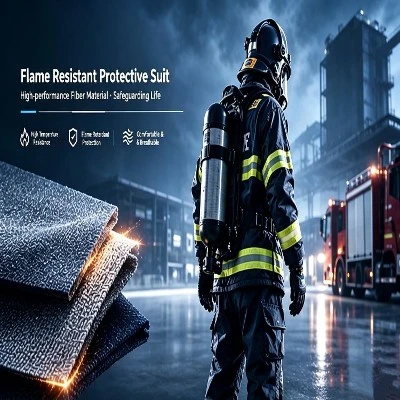

Firefighting protective clothing-specifically the widely used structural firefighting suit-typically employs a multi-layer composite design to achieve multiple protective functions, including flame resistance, thermal insulation, waterproofing, and breathability. In accordance with national standards, the typical structure consists of four layers: the flame-retardant outer layer, the waterproof-breathable layer, the thermal insulation layer, and the comfort layer (arranged from the outside in).
Detailed Breakdown of Layers
The 'flame-retardant outer layer' is in direct contact with the fire environment and must possess excellent flame-retardant and physical protection properties. This layer is usually made from abrasion-resistant, flame-retardant materials such as aramid fibers; it effectively protects firefighters from injury caused by flames, sharp objects, or chemical substances. Its flame-retardant performance remains unaffected by repeated washing, and it offers high strength and excellent abrasion resistance.
The 'waterproof-breathable layer' is located beneath the outer layer and serves primarily to block water and steam while preventing the penetration of hazardous liquids. Often composed of materials such as cotton fabric laminated with a polytetrafluoroethylene (PTFE) membrane, this layer offers excellent hydrostatic pressure resistance while allowing water vapor to pass through, thereby facilitating the timely release of sweat vapor. Typically, the hydrostatic pressure resistance is at least 17 kPa, and the water vapor permeability is at least 5,000 g/(m²·24h).
The 'thermal insulation layer' is the critical layer for preventing heat from being conducted to the interior. Generally made from flame-retardant materials such as aramid non-woven fabric or carbon fiber felt, this layer provides excellent thermal retention, insulation, and flame resistance, effectively delaying heat transfer.
The 'comfort layer' is the layer closest to the skin, designed to enhance wearing comfort. Typically made from moisture-wicking materials such as high-count cotton fabric, it effectively absorbs and wicks away sweat, keeping the firefighter's skin dry.
Structural Design
There are two primary forms of structural design for firefighting suits: The 'one-piece (coverall) style', which offers the advantages of relatively lower manufacturing costs and lower overall heat accumulation; and the 'two-piece (jacket and trousers) style', which is easier to put on and take off and offers greater freedom of movement. For two-piece designs, a minimum overlap of 200 mm between the jacket and trousers is usually required to ensure continuous protection.
Requirements for Accessories and Details
In addition to the primary fabric, the accessories used in firefighting protective clothing must also meet rigorous protection standards. These accessories include reflective strips, flame-retardant sewing thread, hook-and-loop fasteners, zippers, and snap fasteners. All hardware components must undergo anti-corrosion treatment and be free of sharp edges; items such as sewing threads and zippers must possess flame-retardant properties and match the color of the outer fabric. Reflective strips must meet performance requirements regarding retro-reflectivity, high-temperature resistance, flame retardancy, wash durability, and resistance to high-low temperature cycling to ensure visibility in the dim environments of a fire scene. The total weight of the protective suit typically does not exceed 3.5 kilograms.