


Firefighter Rescue Protective Clothing: Materials, Structure and Performance
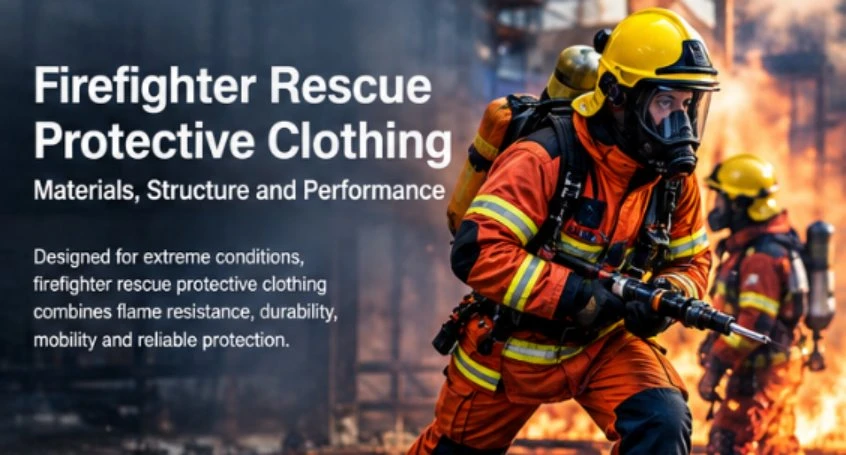
Firefighter rescue operations require protective clothing that combines flame resistance, durability, mobility and protection against demanding working conditions. Winter and summer rescue suits use different material structures, while both are designed around performance requirements for emergency response and rescue work.
What Is Firefighter Rescue Protective Clothing?
Firefighter rescue protective clothing is designed for rescue activities where personnel may encounter heat, flame, abrasion, moisture and other demanding conditions. The supplied document describes both winter and summer configurations and states that the clothing is required to comply with the current XF 633-2006 standard for firefighter rescue protective clothing, with colors, sizing and markings following the applicable national technical requirements.
Winter Rescue Protective Clothing
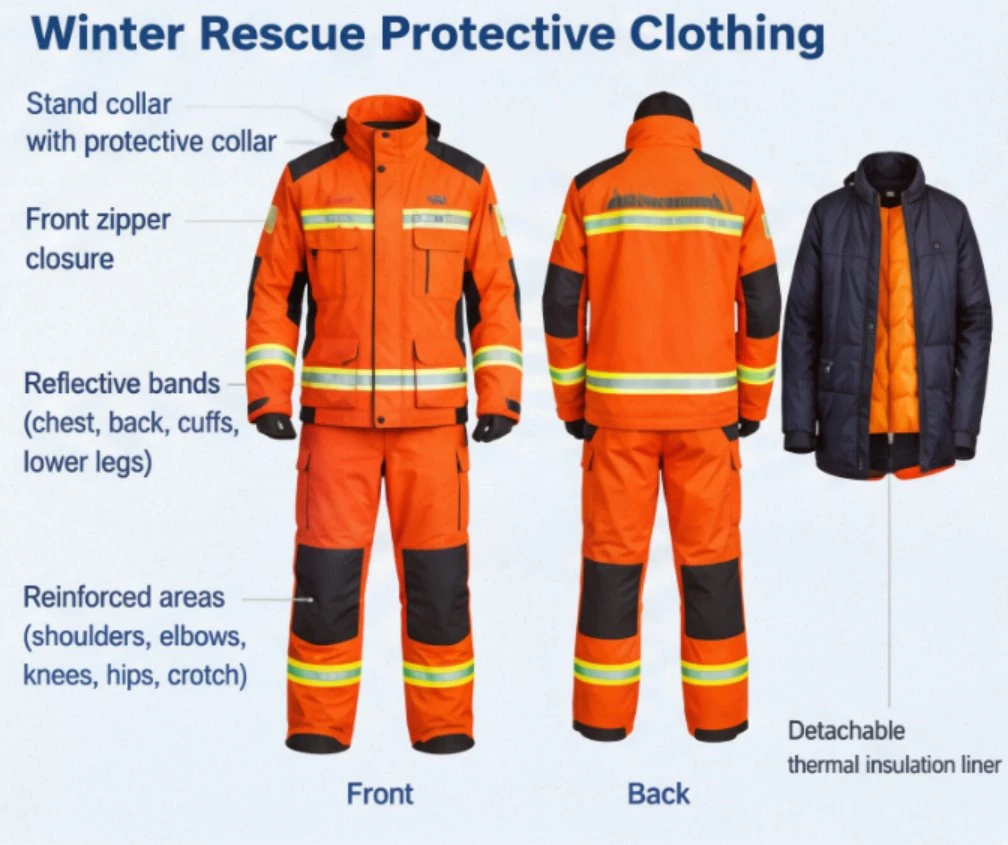
The winter version uses a jacket-and-trousers design that can be connected by zipper to form an integrated garment. A stand collar with a small protective collar, front zipper closure and reflective bands on the chest, back, cuffs and lower legs are included in the described structure. Reinforced areas at the shoulders, elbows, knees, hips and crotch are intended to improve wear resistance.
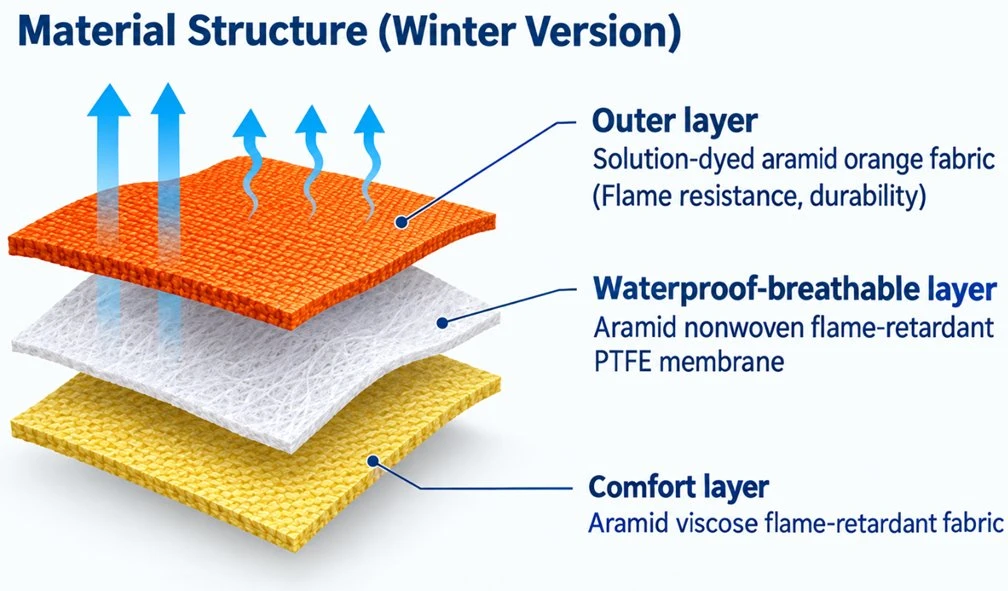
The winter garment uses a multi-layer construction consisting of an outer layer, a waterproof-breathable layer and a comfort layer. The supplied material specifies solution-dyed aramid orange fabric for the outer layer, an aramid nonwoven flame-retardant PTFE membrane for the waterproof-breathable layer, and an aramid viscose flame-retardant fabric for the comfort layer.
Summer Rescue Protective Clothing
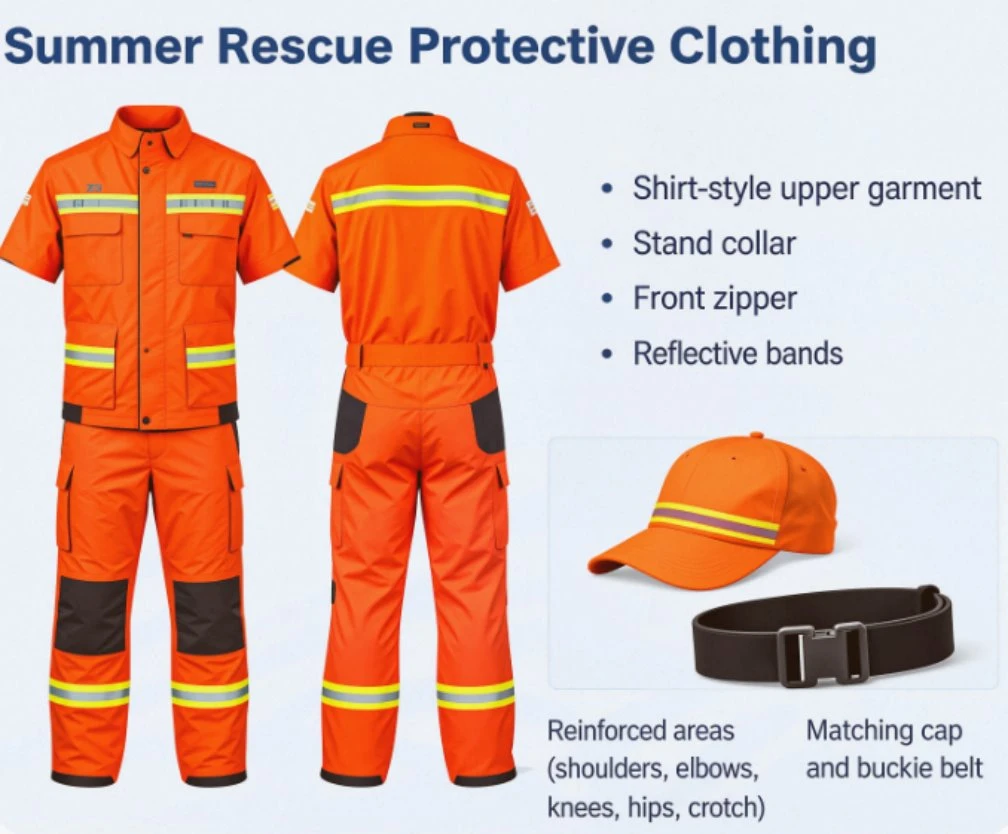
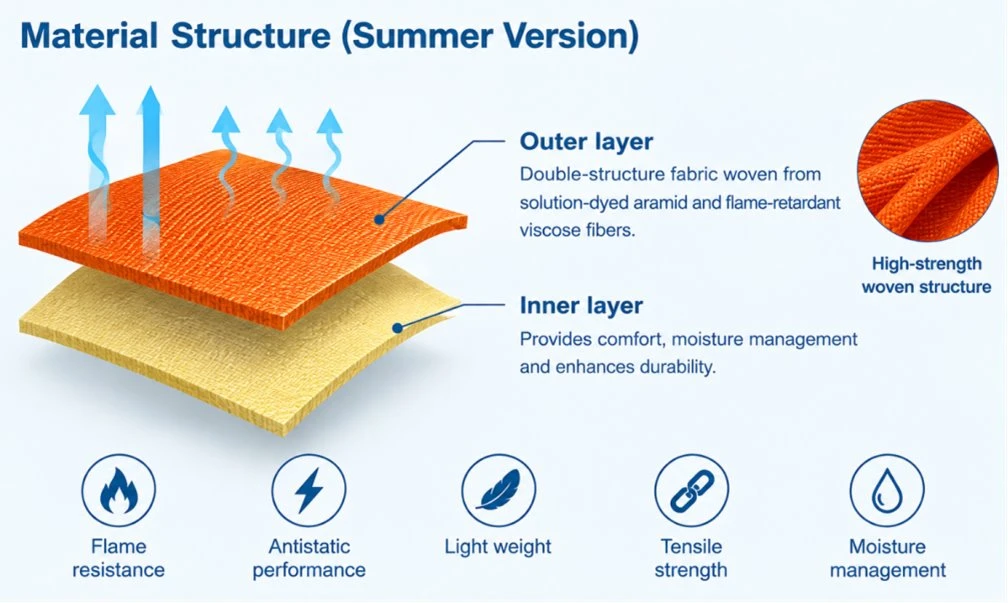
The summer version is a separate top-and-trousers design with a shirt-style upper garment, stand collar, front zipper and reflective bands. Its material is described as a double-structure fabric woven from solution-dyed aramid and flame-retardant viscose fibers, designed to provide flame resistance, antistatic performance, light weight, tensile strength and moisture-management characteristics.
Like the winter version, the summer suit includes a matching cap and buckle belt. The shoulders, elbows, knees, hips and crotch are reinforced for improved wear resistance, with shoulder loops included in the described design.
Key Performance Requirements
The supplied technical specifications focus on flame resistance, wetting resistance, tensile strength, tear strength, thermal stability, color fastness, seam strength and antistatic performance. For the summer fabric, the document specifies a minimum warp and weft breaking strength of 650 N and a tear strength of at least 100 N.
|
Performance |
Winter version |
Summer version |
|
Outer / main fabric weight |
200 ± 10 g/m² |
200 ± 10 g/m² (source text) |
|
Flame damage length |
≤100 mm |
≤100 mm after 25 washes |
|
Afterflame time |
≤2 s |
≤2 s |
|
Water repellency |
≥ Grade 3 |
≥ Grade 3 after 5 washes |
|
Antistatic charge |
≤0.6 μC per garment |
≤0.6 μC per garment |
|
Thermal stability |
Dimensional change ≤5% |
Dimensional change ≤5% after 180±5°C test |
Note: Values are presented according to the supplied document. Product compliance should be verified against the applicable current specification and test reports.
Waterproof-Breathable and Thermal Insulation Layers
For the winter version, the waterproof-breathable layer is specified with a moisture vapor transmission rate above 5,000 g/(m²·24 h) and oil repellency of at least Grade 3. The thermal insulation liner is detachable and uses separate upper and lower sections.
The document describes a flame-retardant aramid adhesive fabric as the liner outer material and specifies a 90% white duck down filling, with minimum filling quantities of 100 g for the upper garment and 70 g for the lower garment. A test report is required for the stated down specifications.
Why Aramid-Based Protective Textiles Matter
The supplied company profile describes an integrated business covering flame-retardant staple-fiber spinning, functional fabric weaving and finished firefighter protective clothing. It focuses on inherently flame-retardant, high-temperature and high-strength yarns and fabrics for demanding safety applications.
The product chain covers flame-retardant fibers and yarns, functional base fabrics, outer-shell fabrics, thermal insulation liners, antistatic flame-retardant fabrics and finished firefighter and industrial protective garments. The company also describes customization services for fabric specifications, weight, functional composites and private-label or contract production according to applicable standards.
Choosing Protective Clothing for Different Rescue Conditions
For winter rescue operations, the layered structure and detachable thermal liner described in the document provide a configuration focused on cold-weather protection while maintaining the required flame-retardant and mechanical performance. For summer operations, the lighter separate garment structure emphasizes mobility and comfort while retaining the specified protective properties.
When sourcing firefighter rescue clothing, buyers should confirm the applicable standard, season, material composition, garment structure, performance requirements, labeling and required test documentation before production or bulk purchasing.
Conclusion
Firefighter rescue protective clothing is a complete protective textile system rather than simply a garment. Material selection, layered construction, reinforcement, reflective elements and verified performance requirements all contribute to the final product. With integrated capabilities from flame-retardant fibers and yarns to fabrics and finished garments, specialized suppliers can support different rescue and industrial protection requirements.
Need firefighter protective clothing, flame-retardant fabric or customized rescue garments? Share the required standard, application, season and technical specifications with the supplier to discuss a suitable material and garment configuration.