


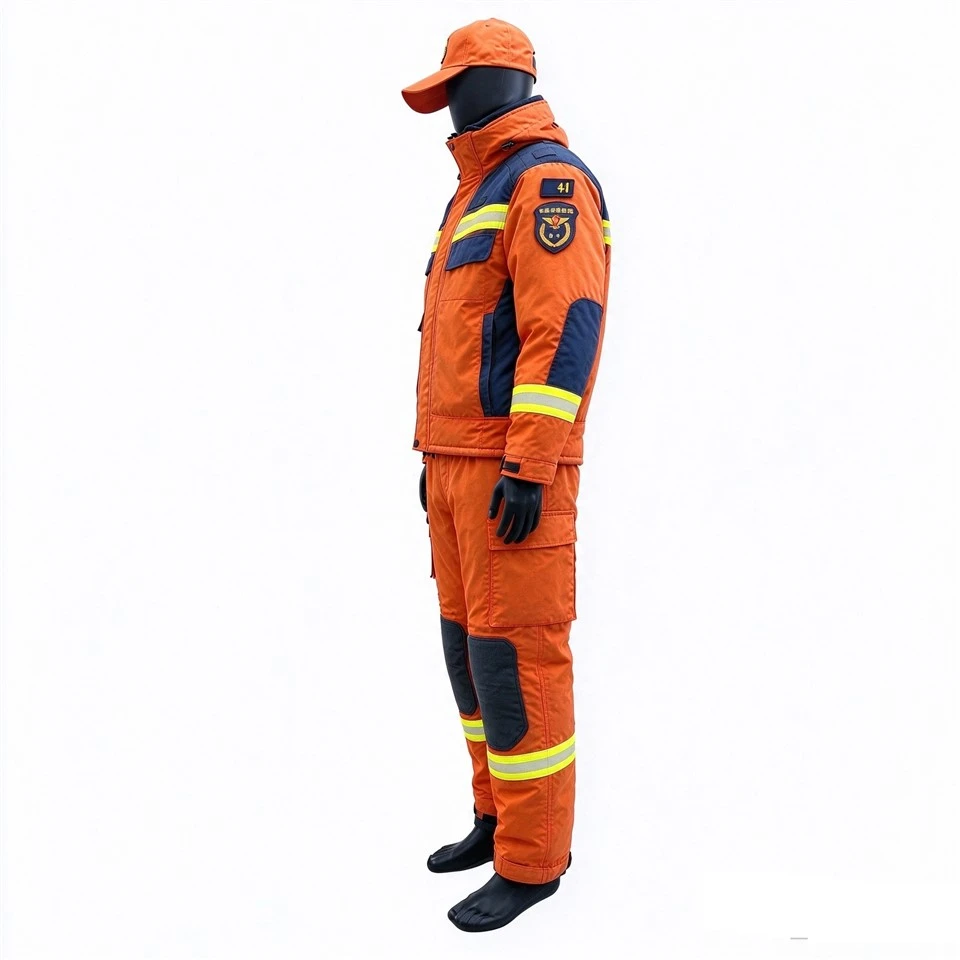
Jiangsu Jushuo New Materials Technology Co., Ltd. is one of the leading manufacturers and suppliers of fire protective clothing in China. We are committed to providing customized materials made in China with low price. Welcome to buy high-grade fire protective clothing in stock here from our factory. Also, free sample is available.
Product Description
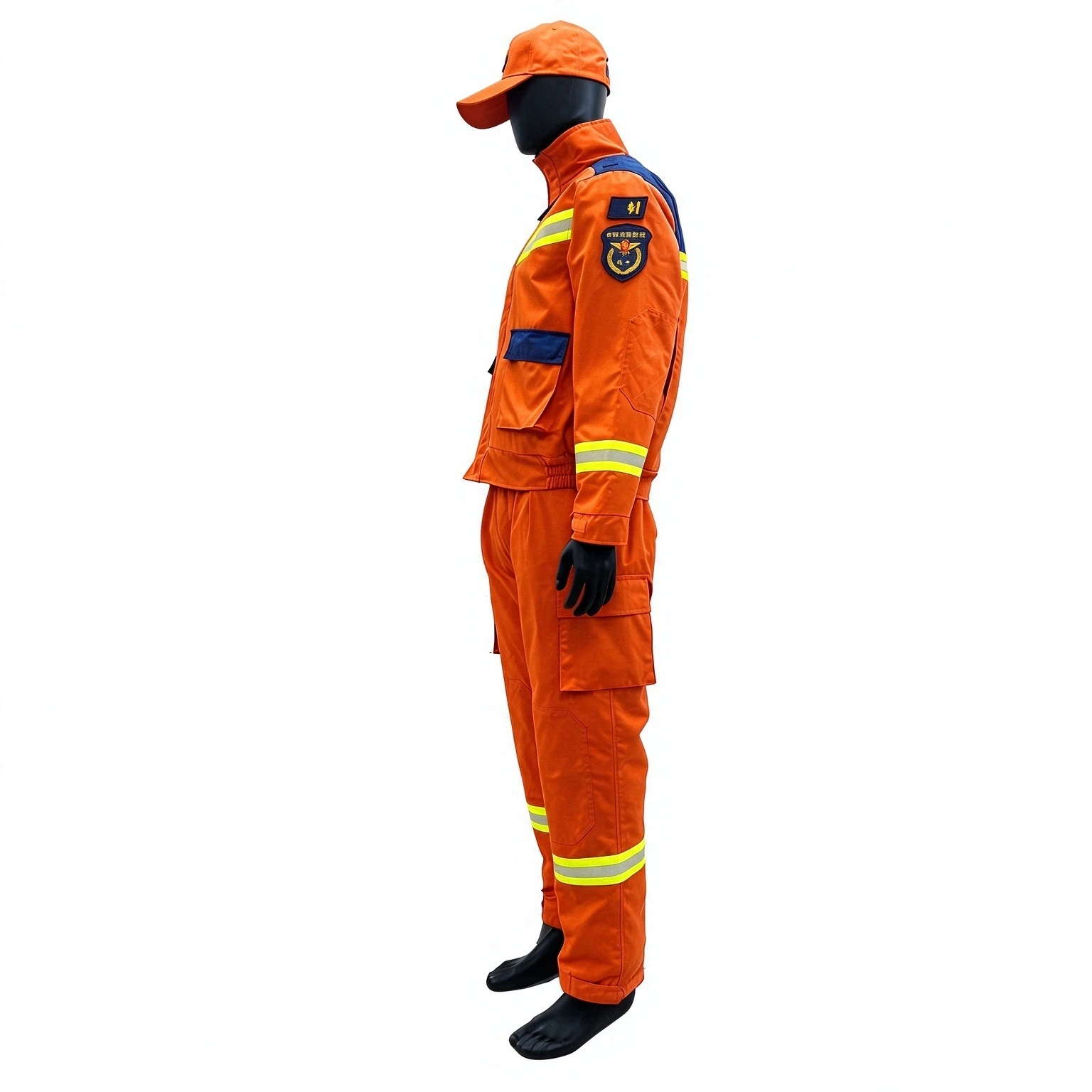
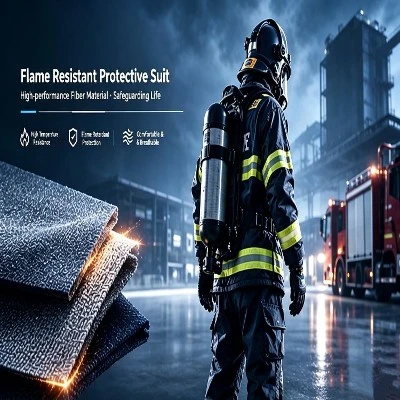
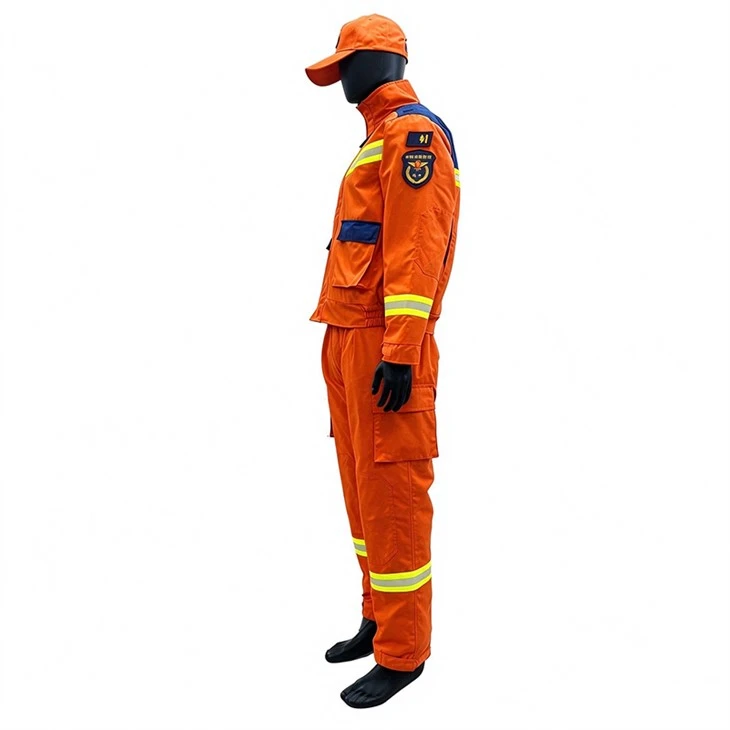
Designed for professional firefighters and emergency response teams, our Fire Protective Clothing provides functional protection for demanding rescue operations across different seasons. Available in summer and winter configurations, it combines flame-resistant materials, durable construction, and practical design features to support mobility and comfort during fieldwork.
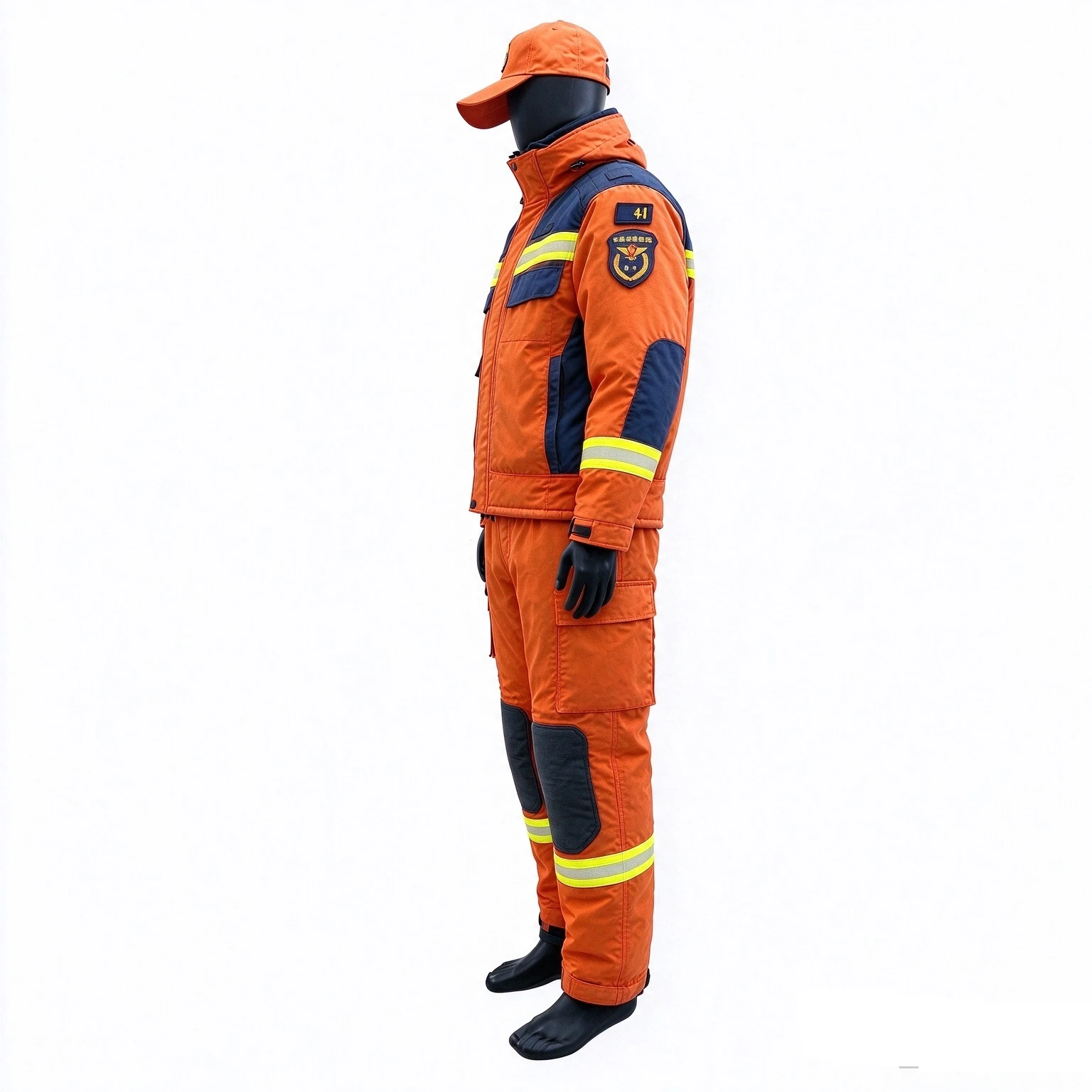
The garment is made with flame-resistant aramid fabrics and other specified protective materials. Reinforced areas at the shoulders, elbows, knees, hips, and crotch help improve resistance to wear in high-contact areas. Reflective strips on the chest, back, cuffs, and trouser hems enhance visibility in low-light working environments.
The summer version features a lightweight, two-piece shirt-and-trouser design. The winter version adds a jacket-to-trouser connecting zipper and a removable insulated inner layer to provide additional warmth in colder conditions.
Both versions feature an upright collar with a protective collar flap, a front zipper closure, adjustable-fit accessories, and attachment loops at the shoulders. These practical details make the garments suitable for fire and rescue departments, emergency response organizations, and professional protective clothing procurement.
Key Features
Flame-Resistant Aramid Fabric
The protective garment uses flame-resistant aramid materials combined with flame-retardant viscose fibers in the specified fabric construction. The fabric is designed to resist flame exposure while maintaining strength and flexibility for demanding rescue work.
Seasonal Protection Options
Two configurations are available to suit different working conditions:
·Summer Version: A lightweight, two-piece shirt-and-trouser design for warm-weather rescue operations.
·Winter Version: A protective outer garment with a connecting zipper between the jacket and trousers, plus a removable insulated inner layer for additional warmth.
Reinforced High-Wear Areas
The shoulders, elbows, knees, hips, and crotch feature additional reinforcement to help resist abrasion during crawling, kneeling, climbing, and equipment handling. Two attachment loops on the shoulders provide practical options for compatible accessories.
High-Visibility Reflective Strips
Reflective strips are positioned on the chest, back, sleeve cuffs, and trouser hems. These details help improve the wearer's visibility in dimly lit working areas and during nighttime rescue activities.
Durable and Comfortable Construction
The fabric is designed to combine strength, flexibility, and lightweight performance. Specified requirements cover tensile strength, tear resistance, seam strength, thermal stability, and colorfastness to support consistent garment quality.
Anti-Static Performance
The garment is designed to meet specified electrostatic charge limits for both the upper and lower sections. This feature supports the protective clothing requirements of applicable rescue operations, subject to the relevant testing conditions.
Practical Accessories
Each set includes a matching baseball-style cap and buckle belt. The cap features an embroidered firefighter badge and an adjustable rear fastening. The belt is designed with a smooth finish and corrosion-resistant metal fittings.
Matching flame-resistant adhesive sleeve patches are supplied with each set. Additional right-arm sleeve insignia are allocated according to the applicable procurement requirements.
Removable Winter Insulation
The winter version includes separate upper and lower insulated liners that can be removed when needed. The supplied specification calls for white duck down filling, with defined filling weights and down-content requirements, subject to verification by the relevant inspection report.
Technical Specifications
|
Parameter |
Summer Version |
Winter Version |
|
Product Name |
Fire Protective Clothing |
Fire Protective Clothing |
|
Garment Structure |
Two-piece shirt and trousers |
Jacket and trousers with connecting zipper |
|
Main Fabric |
Solution-dyed aramid and flame-retardant viscose fibers in a double-layer weave |
Solution-dyed aramid outer fabric, flame-retardant PTFE membrane-based waterproof and breathable layer, and aramid-viscose comfort layer |
|
Fabric Weight |
200 ± 10 g/m² |
Outer fabric: 200 ± 10 g/m² |
|
Flame Damage Length |
≤ 100 mm after 25 wash cycles |
≤ 100 mm |
|
Afterflame Time |
≤ 2 seconds |
≤ 2 seconds |
|
Melting or Dripping |
Not permitted under specified test conditions |
Not permitted under specified test conditions |
|
Tensile Strength |
Warp and weft: ≥ 650 N |
Warp and weft: ≥ 1,000 N |
|
Tear Strength |
Warp and weft: ≥ 100 N |
Warp and weft: ≥ 190 N |
|
Thermal Stability |
Dimensional change ≤ 5% after testing at 180 ± 5°C |
Dimensional change ≤ 5% |
|
Surface Water Resistance |
Spray rating ≥ 3 after 5 wash cycles |
Spray rating ≥ 3 |
|
Water Vapor Transmission |
Not specified in the supplied summer requirements |
> 5,000 g/(m²·24 h) |
|
Oil Repellency |
Not specified in the supplied summer requirements |
Grade ≥ 3 |
|
Seam Strength |
≥ 350 N |
≥ 350 N |
|
Electrostatic Charge |
≤ 0.6 μC per upper garment and per pair of trousers, respectively |
≤ 0.6 μC per upper garment and per pair of trousers, respectively |
|
Colorfastness |
Water rubbing, washing, and light fastness ≥ Grade 3 |
Water rubbing, washing, and light fastness ≥ Grade 3 |
|
Color Difference |
Grade 4 or better, according to the applicable assessment method |
Grade 4 or better, according to the applicable assessment method |
|
Stitch Density |
At least 12 stitches per 3 cm for visible and hidden stitching; at least 9 overlock stitches per 3 cm |
At least 12 stitches per 3 cm for visible and hidden stitching; at least 9 overlock stitches per 3 cm |
|
Insulated Inner Layer |
Not included |
Removable upper and lower liners |
|
Inner-Liner Filling |
Not applicable |
Specified white duck down filling; upper garment ≥ 100 g and lower garment ≥ 70 g |
|
Down Content |
Not applicable |
Down content ≥ 87%; down cluster content ≥ 81%, subject to inspection report |
|
Standard Reference |
XF 633-2006, subject to confirmation of current applicability |
XF 633-2006, subject to confirmation of current applicability |
Applications
Fire Protective Clothing is designed for professional fire and rescue personnel working in demanding operational environments.
·Emergency Rescue Operations: Suitable for rescue personnel performing physical tasks in challenging conditions.
·Fire and Rescue Team Support: Designed for professional teams requiring flame-resistant workwear with reinforced high-wear areas.
·Outdoor Emergency Response: Summer and winter options support procurement for different seasonal conditions.
·Nighttime and Low-Light Operations: Reflective details help improve visibility in dimly lit environments.
·Technical Rescue Activities: Reinforced knees, elbows, shoulders, and other high-contact areas are designed for repeated movement and surface contact.
FAQ
Q: What is the difference between the summer and winter versions?
A: The summer version uses a two-piece shirt-and-trouser design with a lightweight flame-resistant fabric. The winter version uses a layered construction with a jacket-to-trouser connecting zipper and a removable insulated inner layer for additional warmth.
Q: What materials are used in the protective clothing?
A: The summer version uses a double-layer woven fabric combining solution-dyed aramid and flame-retardant viscose fibers. The winter version uses an aramid outer layer, a waterproof and breathable PTFE membrane-based layer, and an aramid-viscose comfort layer.
Q: Does the winter version include a removable liner?
A: Yes. The winter configuration includes separate upper and lower insulated liners that can be removed. The specified filling is white duck down, with minimum filling weights and down-content requirements that should be verified through the relevant inspection documentation.